Parasite is the Film Nigerians Should Have Made
But simply lack the vision or guts to.
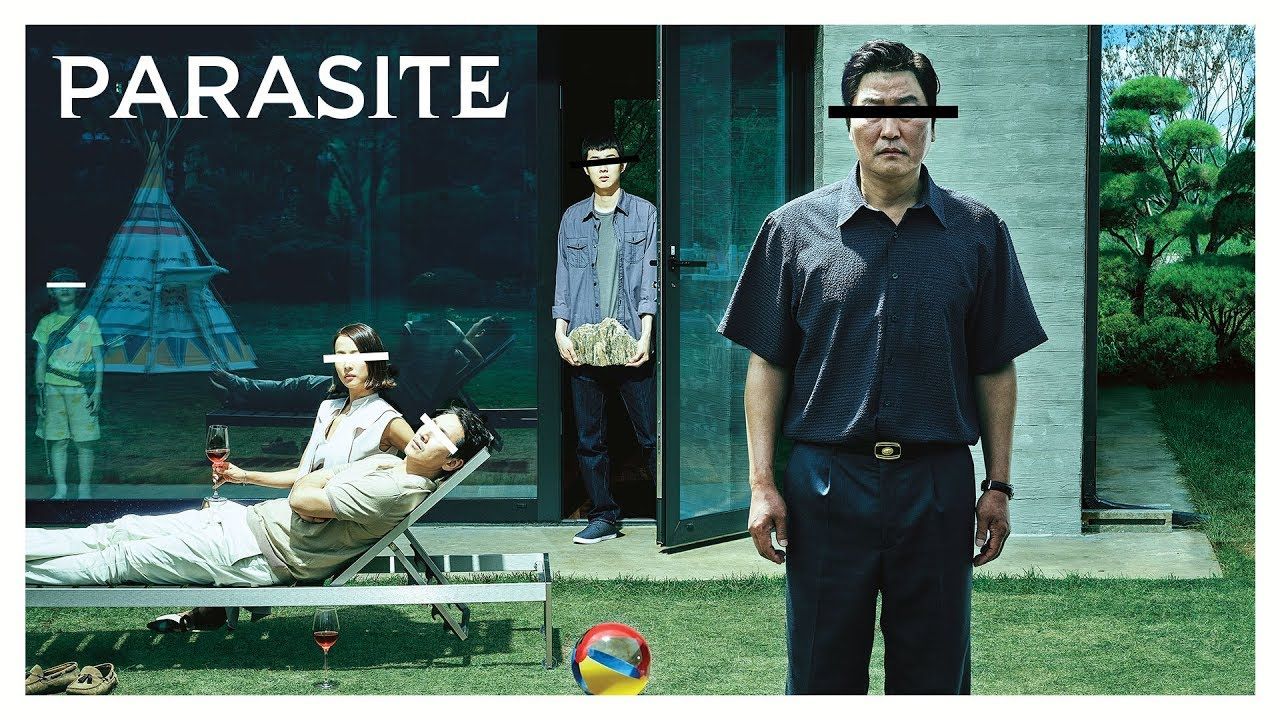
Parasite tells the story of two families, the poverty stricken Kim family, who lives at the bottom of a hill in a filthy neighbourhood, and the Park family, who live in the lap of luxury, in a custom designed mansion at the top of the hill, no doubt to emphasise the steep metaphoric climb the Kims spend most of the movie trying to make.
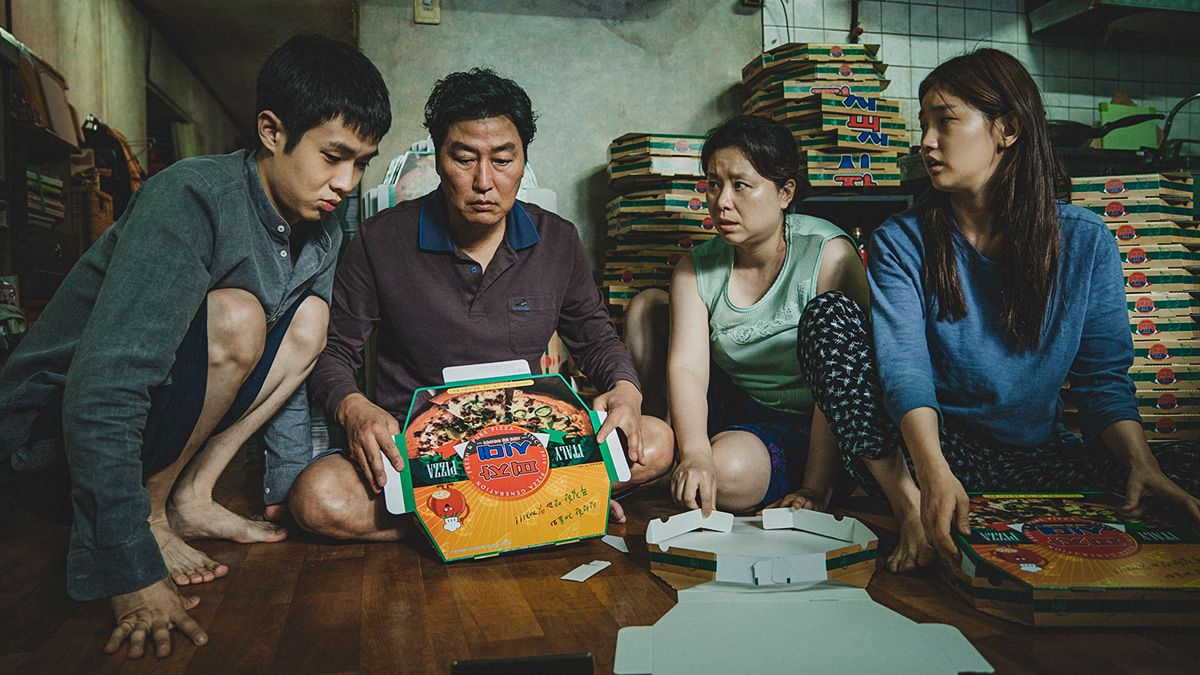

The average Nigerian middle class family has multiple domestic staff who live with them year round, whereas in stark contrast, only relatively few families in South Korea can afford to hire live-in help like the Park family do in Bong Joon Ho's latest film, so it's interesting that this arresting social satire about the invisible war between the upper class haves, and the less privileged have-nots we let into our lives, is only just being told in 2019, and by a South Korean filmmaker no less.


In Parasite, the Kim family engineers their way out of poverty and unemployment by systematically staging crises to frame the various domestic staff employed by the Park family in order to usurp their jobs, salaries, and position within the Park household using forged qualifications and personal recommendations from their already employed family member.

The film transitions seamlessly from a somewhat comedic beginning where you can't help but hope the Kims pull off their plan since they're so obviously the underdogs of the story, to a plot twist so sinister, you never see it coming as Bong Joon Ho masterfully weaves subplot after subplot into the main narrative.
Suffice to say at every twist in the story, the themes of the Park's clueless oblivion to the suffering of the Kims, and the Kims hatred of the Parks for simply just existing underscores every scene despite the fact that unlike most poor people, the Kims are experts at playing the part of well-exposed snobs, but beneath their ajebuttery veneer, they constantly question their right to even breathe the same oxygen as the Park family.

Our society's equivalent are the children of the working class, lucky or smart enough to secure a place at the top boarding schools attended by the progeny of Presidents, Senators, Governors, and Billionaires, who despite the initial enthusiasm to join a vehicle advertised to transport them into the ranks of the upper classes (or at least close enough to rub shoulders with them), are constantly reminded of the myriad little ways in which they don't and will never really belong.
We might tut whenever a family is exposed for taking their servant along on a family outing, then seating them away from the family, often forbidden to eat, but deep down Nigerians are even more familiar with the class dynamics Parasite explores so brilliantly than any South Korean.
Nigerians are no stranger to the absolute depression of going home after a long day's work through the flooded streets of Lagos which might as well be the lagoon when it rains.
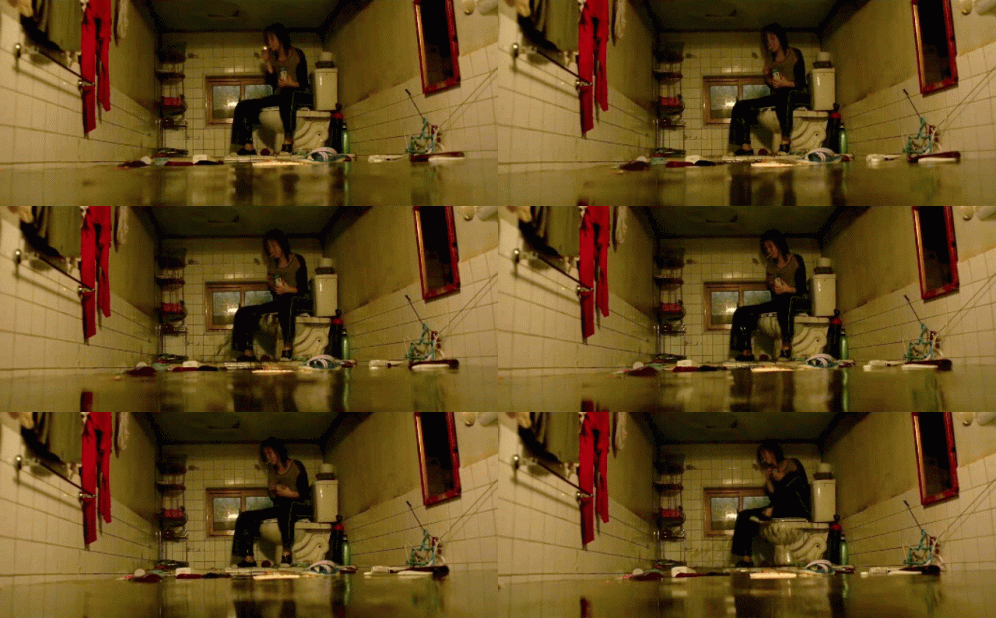
Perhaps at no other time, is the gulf between the rich and the poor more pronounced, so when mistakes are inevitably made, and their plans fall apart courtesy of one of the servants they forcefully displaced, nothing is more pathetic and heart wrenching than the powerful cinematography of the Kims torturous descent back to their lives of squalor.
The scenes are perfectly set up to frame their growing despair with each step downwards, and grip the viewer they do, with the pain and fear of falling after climbing so high.

We have all been either the people riding along in the heated SUV, admonishing their drivers to mind potholes, or the hopeless pedestrians trudging home in knee deep water, drenched by the passing wave, only to return to the confines of the face-me-I-face-you, met not by a servant armed with an umbrella, and hot running water for a shower, but a scene of chaos, as they spend the long night fighting to stop their only worldly possessions from floating away in flood of sewage and shit.
Nigeria is awash in true stories of the poor ruthlessly taking advantage of the unassuming kindness of wealthier acquaintances to get ahead a few rungs on the socioeconomic ladder.
Only last week, an upwardly mobile young man, doing financially well for himself, was murdered by his gateman and neighbour, who conspired to possess the new car he had just bought. Reportedly, he had been very kind to his gate man, and was even assisting him financially in addition to paying his regular wage.
So, it's quite surprising that mired as we are in the friction of domestic class warfare, Nigerian filmmakers are yet to turn a critical eye on the innumerable real life examples of houseboys, housemaids, gatemen, and drivers recruited from the ranks of the less privileged to serve in the homes of the well-to-do, conspiring with their fellow servants to infiltrate the world of wealth, murder their employers and commandeer their possessions.
Instead, our contemporary filmmakers, year after year, churn out the same lazy concepts, sticking safely to well worn, hackneyed, mono dimensional stories like weddings, relationships, and businesses on the brink of failure.
Their inertia is made worse lately, by the long awaited arrival of foreign investors, uninformed about the social landscape, but desperate to swell their subscriber numbers with our considerable population by throwing money at any shoddily constructed plot with a big Nollywood name behind it.
And so, Nigerian filmmakers, desperate to suck at the teat of Netflix, eschew cerebral storylines that might force the audience to think harder or more deeply, for insultingly obvious plots, slapstick acting, showy sets meant to impress provincial viewers with gaudy displays of wealth, and shallow characters devoid of development, because that's what sells to the masses in a country where suffering is high, and self-cultivation low.
It's a huge pity because we have so many fascinating, full bodied stories to tell. It's likely however, that Nigeria's most interesting stories will go untold because they're far too complex for our current crop of filmmakers.
When one recalls how offended Nigerians were that Lionheart, a film as basic as cinematically possible, was rejected (on a technicality) for nomination at The Academy Awards where, had it been successfully accepted, it would have been co-nominee for Best International Feature Film (formerly Best Foreign Language Film) with Parasite, a film leagues beyond it in every regard, it becomes embarrassingly clear why Nigerian filmmakers are happily ensconced in the firm grasp of mediocrity.
Parasite is a gorgeously made film in which not a single second on screen is wasted. Every frame is strategically and beautifully shot, and each of the characters sells you so completely on who they are, and what they have to accomplish, that you find yourself hopelessly taken along for the breathless ride.
This is by far Bong Joon Ho's best film, and the film Nigerians should have made first, but didn't have the guts to.
Down to the burglary proof!